
Complete Guide to Trekking in the Everest Region
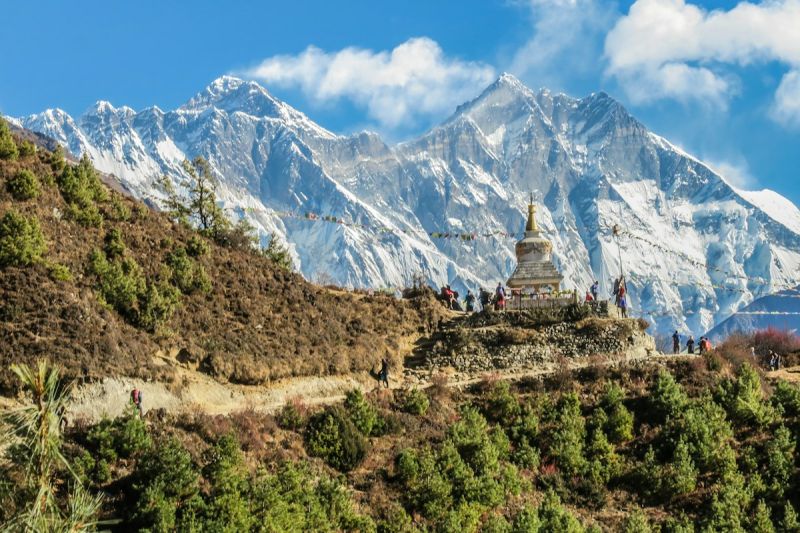
Everything you need to know about trekking in the Khumbu — permits, routes, acclimatization, teahouses, and insider tips from our guides.
Overview
The Everest Region (Khumbu) is the world's most famous trekking destination. Home to Mount Everest (8,848.86m), it offers routes for every level — from the classic Everest Base Camp trek to the challenging Three Passes and technical peak climbing.
Popular Routes
Everest Base Camp (12-14 Days)
The classic route: Lukla → Phakding → Namche → Tengboche → Dingboche → Lobuche → Gorak Shep → EBC → Kala Patthar. Best for first-time Himalayan trekkers.
Gokyo Lakes & Gokyo Ri (12-14 Days)
Diverges from EBC route at Namche. Visits turquoise Gokyo Lakes, crosses Cho La Pass (optional), summits Gokyo Ri (5,357m) for arguably the best Everest panorama.
Three Passes Trek (18-21 Days)
The ultimate Khumbu traverse: Kongma La (5,535m), Cho La (5,420m), Renjo La (5,360m). Requires excellent fitness and prior high-altitude experience.
Everest View Trek (7-9 Days)
Shorter option reaching Tengboche (3,860m) and Everest View Hotel (3,880m). Ideal for those with limited time or altitude concerns.
Permits Required
- Sagarmatha National Park Permit: NPR 3,000 (foreigners)
- Khumbu Pasang Lhamu Rural Municipality Permit: NPR 2,000
- TIMS Card: No longer required for Khumbu (replaced by local permit)
Getting There
Flight: 35 min Kathmandu → Lukla (weather dependent, delays common). Book early morning flights.
Drive + Trek: 10-12 hrs Kathmandu → Phaplu (or Salleri), then 5-6 days trek to Namche. Good backup if flights cancelled.
Acclimatization Strategy
Our non-negotiable acclimatization days:
- Day 3-4: Namche Bazaar (3,440m) — hike to Everest View Hotel (3,880m)
- Day 6-7: Dingboche (4,410m) — hike to Nangkartshang (5,100m)
Additional day at Chhukung (4,730m) recommended for Three Passes and peak climbing.
Teahouse Standards
Lower elevations (up to Namche): Private rooms, attached bathrooms, hot showers, WiFi, varied menus.
Higher elevations (Dingboche+): Basic rooms (often shared), common squat toilets, bucket showers (extra), limited WiFi, simpler menus.
Insider Tips from Our Guides
- Carry cash (NPR): No ATMs above Namche. Card machines rare.
- Water: Bring purification (tablets/filter). Bottled water expensive and creates plastic waste.
- Charging: Solar chargers unreliable. Bring 2-3 power banks (20,000mAh+). Pay for charging at teahouses.
- Lukla flights: Build 2 buffer days before international departure. Helicopter option exists (USD 500-600/person shared).
- Diamox: Consult your doctor. Our guides carry it for emergency use only.
When to Go
Peak Seasons: Oct-Nov (clear, busy), Mar-May (rhododendrons, warmer).
Shoulder: Dec-Feb (cold, clear, quiet), Aug-Sep (monsoon tail, fewer crowds, flights more reliable).
Why Choose Winterfell
We don't do fixed departures. Every EBC trek is custom-designed around your dates, fitness, interests, and budget. Small groups (max 8), IFMGA-trained leaders, porter welfare guaranteed, satellite comms on every trip.
Related Articles
High-Altitude Acclimatization: The Science & Practice
Understanding how your body adapts to altitude, recognizing AMS/HAPE/HACE, and the acclima...
Packing List for Himalayan Trekking: The Essentials
Our field-tested packing list for Himalayan treks. What to bring, what to leave, and what...